How Foreign Aid Cuts Will Impact Global Education
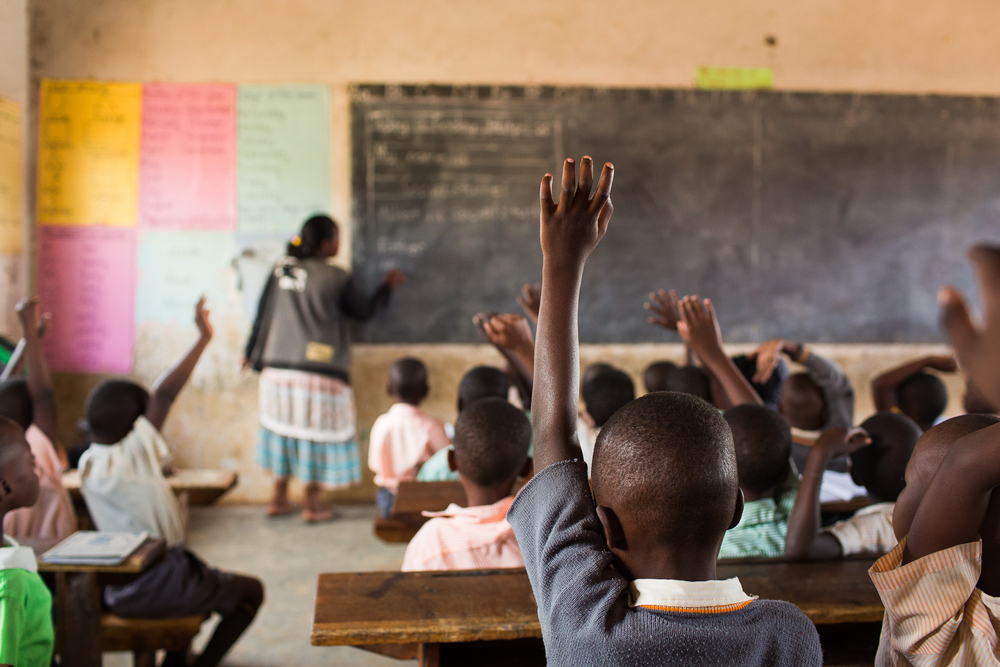
IEP finds that approximately 68 million children are students in national education systems that heavily depend on aid. Anticipated aid cuts in the coming years could jeopardise the quality and accessibility of basic education for millions of these children.i
Alongside health and income, education is widely recognised as one of the pillars of human development. However, in many contexts, access to this essential resource is contingent on external funding. IEP’s recent Official Development Assistance report highlights the risks that many countries face to their wellbeing and development due to cuts in funding by wealthy governments around the world.
The countries most reliant on ODA for basic education are among the world’s most vulnerable – many are in sub-Saharan Africa, others are small island nations (particularly in the Pacific), and several are affected by conflict and displacement.
The threats to Official Development Assistance (ODA) for education appear particularly dire given that the sector has not been a priority growth area in the past decade. In total, global ODA grew by around 68 per cent in real terms between 2014 and 2023, while education-directed ODA grew by only 35 per cent.
Basic education typically refers to the first nine years of formal schooling: primary (roughly ages 6–11) and lower secondary (ages 12–14). Such education not only equips children with fundamental skills like reading and numeracy but also shapes their social and emotional development, instils civic values, and opens pathways to further education and employment. It is also the most equity-promoting level of learning, as it reaches the greatest number of children, including those in rural, marginalised, and crisis-affected communities. Without it, generational cycles of poverty and exclusion are far more likely to persist.
In the past 25 years, the gains made in basic education have been sizable. Since 2000, primary school completion rates have climbed from 82 to 88 per cent, while lower secondary completion rose from 62 to 75 per cent. These gains are fragile, and some have already begun to plateau or even reverse – in some cases exacerbated by the COVID-19 pandemic. In the most economically vulnerable places around the world, gains in educational attainment are deeply intertwined with international financial support.
Globally, foreign aid to education is just a drop in the bucket of total expenditure on education. In 2023, the world spent about $5.4 trillion in public funds on education, and among countries that received education-directed ODA, the total was around $1.2 trillion. In contrast, there was only around $13-15 billion in education-directed ODA (representing less than six per cent of total ODA), with about 60 per cent of these funds going to primary and secondary education. This means that, even among recipients, education-directed ODA represented only about one per cent of the total public spend on education.
Today, there are just over two billion children under 15 worldwide. Of these, 1.8 billion live in the 135 countries that received education-directed ODA in 2023. However, IEP analysis finds that the degree of dependence on ODA for a country’s education system varies substantially.ii
In nearly two-thirds of cases, education-directed ODA effectively makes up less than 10 per cent of public expenditure on education. However, in more than two dozen countries, there appears to be structural dependence on development aid in the education sector, with an estimated 15-82 per cent of the public provision relying on ODA. The 27 countries that are most dependent on ODA for their education systems are shown in the following table.
link