Educators at Little Rock symposium discuss responding to students’ traumatic experiences
Arkansas ranks near the top in the United States in the percentage of its children who have had multiple experiences that can impact their health negatively, illustrating the need for resources focused on mental health issues in schools, a pediatrics professor said Wednesday.
“When we looked post-covid-19 … we had a marked increase in teenage suicidal behavior or thoughts,” Dr. Chris Smith, project director for Arkansas Mental Health Access for Pediatric Primary Care, said. “We have worked to provide resources where we can to address those kind of mental health issues.”
Smith, who also practices and teaches at the University of Arkansas for Medical Sciences, was part of a nine-person team overseeing the 2025 School-Based Mental Health Symposium. Run by Arkansas Mental Health Access for Pediatric Primary Care, a program jointly developed by the UAMS and Arkansas Children’s Hospital, the symposium was held at the Embassy Suites by Hilton hotel on Financial Centre Parkway in Little Rock.
According to federal data cited in the United Health Foundation’s latest America’s Health Rankings report, 21.3% of Arkansas children surveyed in 2022-23 had experienced two or more adverse childhood experiences, which include events such the divorce or separation of their parents, the death of a parent or being witness to domestic violence.
Arkansas’ rate of children with multiple such experiences was tied with Oklahoma for second-highest in the United States, with only Montana (22.5%) having a higher percentage. The national average was 14.5%.
The conference’s theme, “Beyond Awareness: Empowering Educators to Respond to Childhood Trauma,” was intended to prompt teachers, nurses and administrators and other school personnel to focus on not only identifying trauma signs and symptoms, but also solutions to fulfill students’ mental and behavioral health needs, organizers said.
“What we typically see is, educators who are working with kids (are) using old methods that aren’t backed by neuroscience,” said Rick Bowman, a trauma and relational neuroscience trainer and consultant. “What they really need are actionable strategies that really work, that have been researched.”
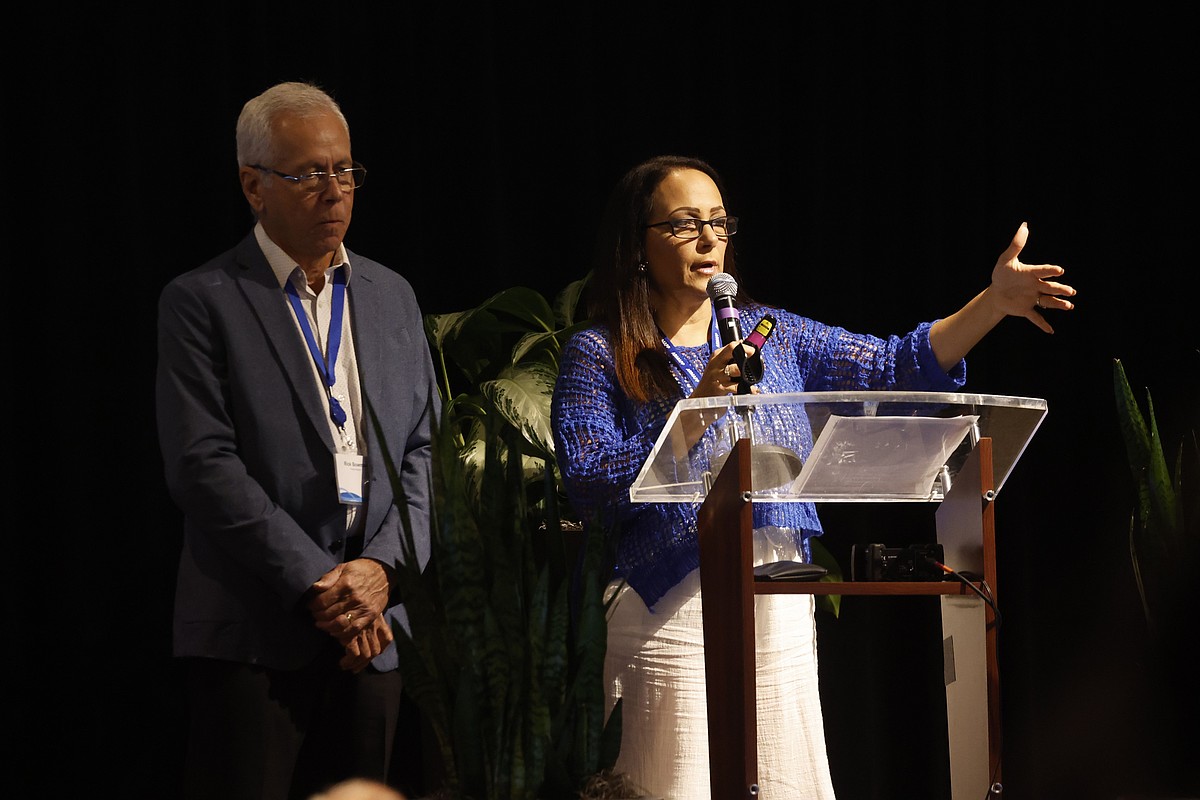
Bowman and his wife Doris, a fellow trainer and Bowman Consulting Group director, were two of the event’s keynote speakers, focusing on behavioral interventions and self-regulation.
Collectively known as “Team Bowman,” the duo spoke about topics such as the need to provide “the right type of stress” — predictable and moderate stress usually delivered with gentler approaches — to “repattern the stress response” and make children more stress-resilient.
According to Doris, grounding outreach programs in scientific research is key to teaching effective practices, as many educators they encounter are hesitant to adopt new methods without noticing immediate results, especially when children’s trauma responses can be unpredictable.
“If I ask a teacher, ‘Is your intervention working,’ their definition of ‘working’ is typically ‘I got compliance from that kid,'” she said. “When we say ‘it’s working,’ (it) may not mean we got compliance, but what it might mean is that child tolerated an interaction better, didn’t have as extreme of a response, was willing to let someone engage with them.”
Opening the day’s event, speaker and domestic violence prevention activist Ashley Bendiksen referenced her own experience dealing with relationship, physical and sexual abuse as a teenager and young adult to outline how trauma manifests itself, as well as how it “forms a set of beliefs that (students) carry into the classroom.”
In addition to causing depression, eating disorders and emotional outbursts, she said, trauma can induce “learned powerlessness” in younger people, a perceived loss of agency causing children to believe they have no power over their own lives.
“Having these conversations of red flags, warning signs, secondary effects of trauma at home in the classroom is really important for educators, because they can make simple but small shifts to reach those kids in a more effective way,” Bendiksen said. “When anyone recognizes a warning sign, how they choose to intervene matters.”
Bendiksen said she’s thankful that ideas of at-home issues affecting students’ well-being and achievement now have wider recognition, but she also considers multiple specialists and caregivers as necessary to provide holistic treatment. A school counselor could address a behavioral symptom that a teacher might not be properly equipped to handle, for instance, or vice versa with an academic effect.
“It’s not always about teachers needing to be a social worker or a therapist, but just starting those conversations, having them in a place that feels really safe for a kid and then referring them to help,” she said.
The symposium also featured a number of breakout rooms with psychologists, social workers and other advocates leading sessions on mental health subtopics — from self-care and trauma masking to adverse childhood experience-informed yoga techniques and working with caregivers who have themselves experienced trauma. Day 2 of the event was scheduled to be delivered as an exclusively virtual training session on trauma-informed practices.
Arkansas Mental Health Access for Pediatric Primary Care itself was established through a four-year grant from the federal Health Resources and Services Administration, set to expire in September 2026. Initially constructed as an educational and consulting tool for primary care providers, the program expanded to K-12 school professionals last year.
As the program provides services to organizations such as the Arkansas School Counselor Association and Arkansas Association of Educational Administrators, Smith said it encourages educators to attend the symposium, and enrollment this year was double from last year’s inaugural event.
He said he’s hopeful to secure additional funding from another foundation, the Arkansas Legislature or a state agency, such as the Department of Human Services or Department of Health, to keep the program going.
“Education in mental health has been a bit lacking,” Smith said. “We’re hoping that people leave better equipped to address issues in their classrooms and in their schools.”
link