Karnataka’s first skill policy to leverage digital tech & AI tools for training, career guidance
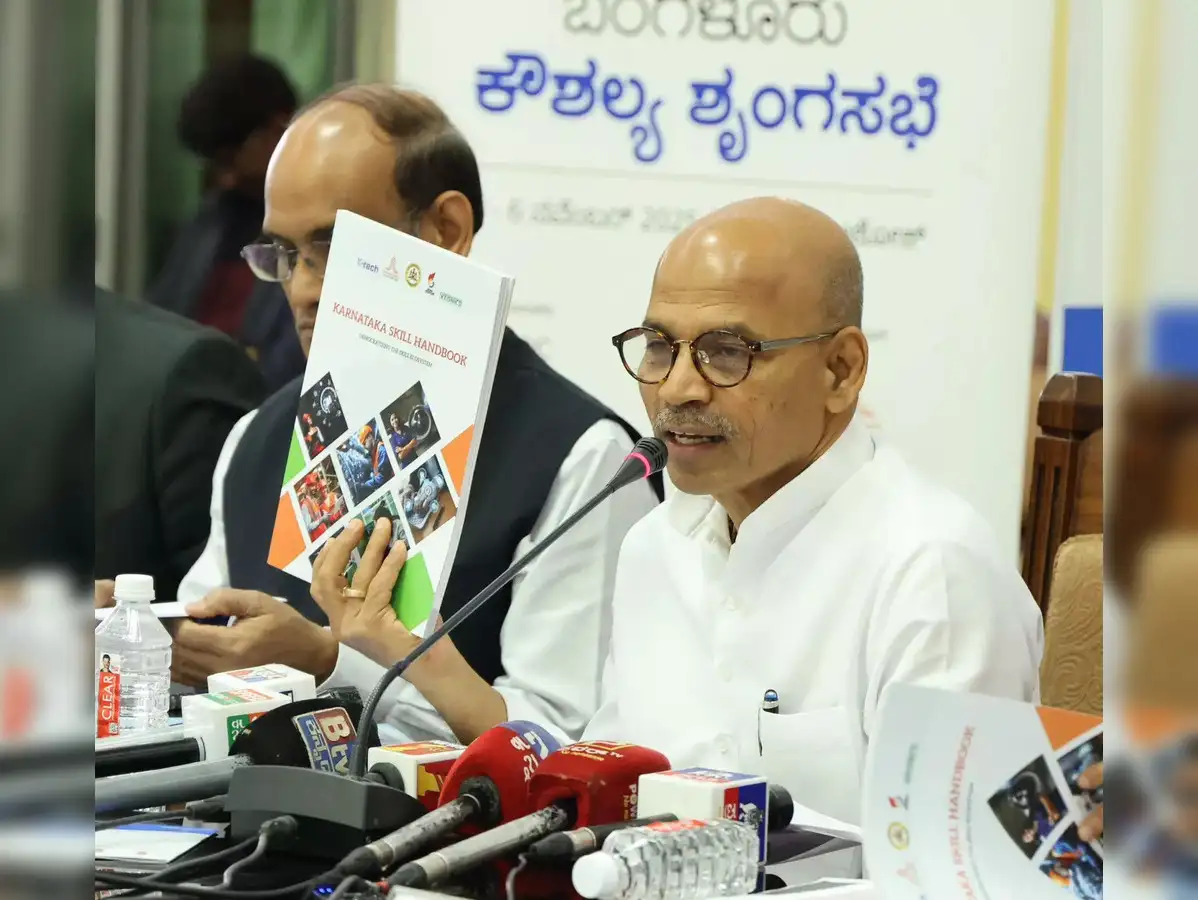
The Cabinet meeting, chaired by Karnataka chief minister Siddaramaiah, approved the policy proposed by Dr Sharanprakash Patil, minister for medical education, skill development, entrepreneurship & livelihood.
The policy seeks to leverage digital technologies and artificial intelligence (AI)-driven tools for training, assessment, and career guidance through a unified digital portal. It also emphasises international workforce mobility by facilitating global certifications, migration support, and specialised training.
Karnataka had no formal skill development policy, though the department of skill development, entrepreneurship & livelihood (SDEL) was established in 2017 to coordinate and drive skilling initiatives.
The minister, in a statement, said that the absence of a policy framework meant that skilling efforts were often fragmented across multiple departments. “With the growing demand for a skilled workforce to meet state, national, and global needs, there was an urgent requirement to streamline and integrate initiatives under a common vision and strategy. The Karnataka Skill Development Policy 2025–2032 addresses this gap by aligning skilling with education, employment, and industry requirements, while also ensuring inclusivity, equity, and future readiness.”
A key highlight of the policy is the integration of vocational education into schools, colleges, and universities through credit-based programmes.
The policy seeks to push for strong industry collaboration through apprenticeships, industry-led training, and ITI adoption; focus on lifelong learning, reskilling, and upskilling to match rapid technological and industrial changes; special interventions for women, persons with disabilities, marginalised communities, the urban poor, and the informal workforce; infrastructure upgrades, including modernisation of ITIs, expansion of GTTCs, and setting up rural and urban skilling hubs.
The policy has positioned the CM’s Kaushalya Karnataka Yojane (CMKKY) 2.0 as an umbrella scheme to unify all state skilling programmes (such as Kalike Jothege Kaushalya, Nanna Vrutti Nanna Ayke, ILC, IMC-K, RPL, and special projects) under a life-cycle approach to skilling.
link