K-12 Educators Learn Powerful Practices for Math Teaching and Learning at 9th Annual Math Summit
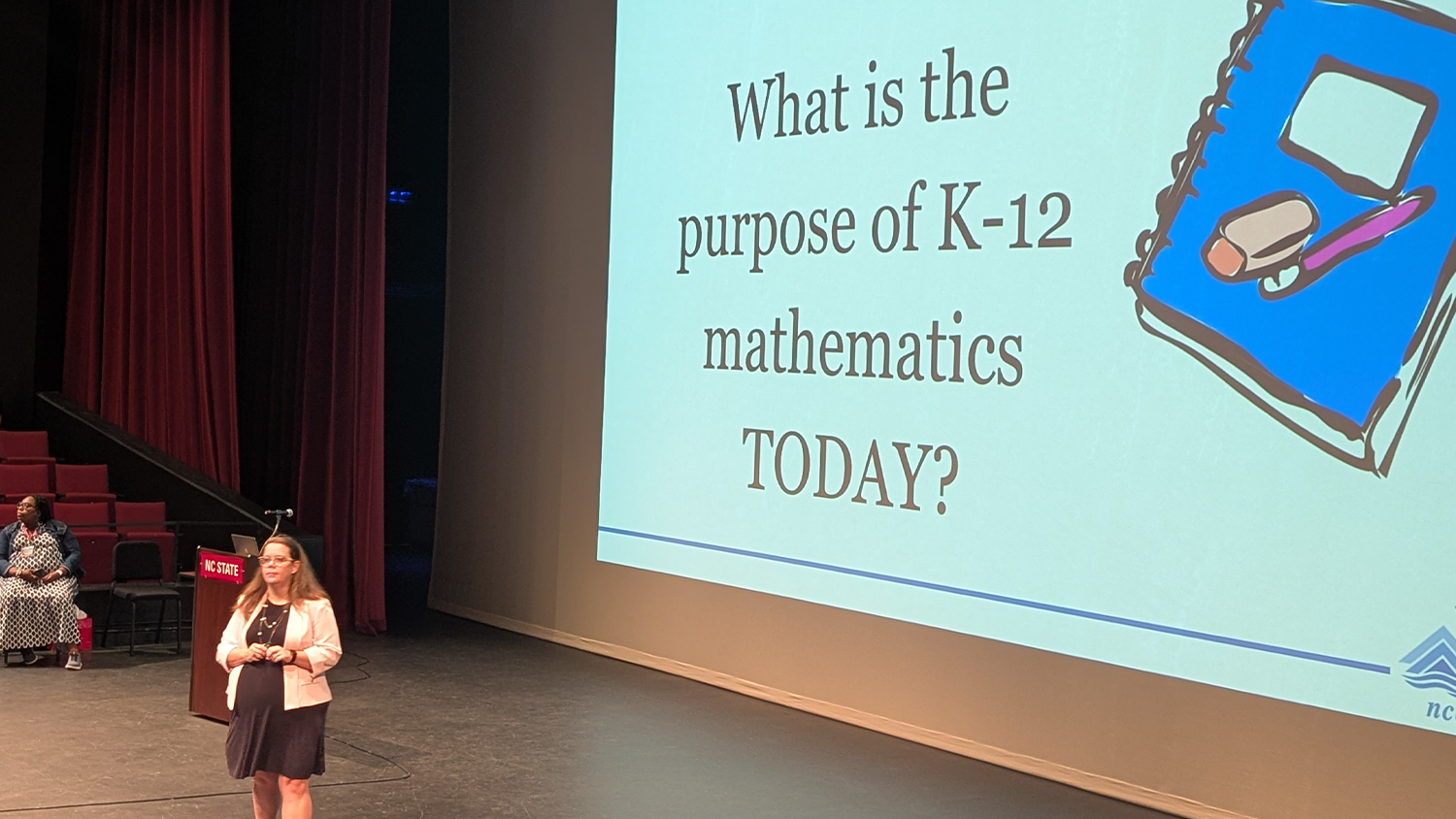
What is the purpose of mathematics in today’s world? After posing the question to a room of K-12 mathematics educators, Emily Myers, a senior mathematics specialist with the North Carolina Center for the Advancement of Teaching, said she believes it’s to help students become confident learners who not only experience the joy of math, but learn to critique the world around them through the development of mathematical thinking.
“You can make the choice this year that the purpose of math is to acquire someone else’s way of knowledge and way of doing … or you can make the choice this year that the purpose of mathematics is going to be focusing on mathematical thinking over just ‘answer getting,’” she said. “I’m not here to tell you which option to [choose], but I am here to advocate that, as educators, it’s our responsibility to make sure that we are preparing all of our students for their future and for the things they’re going to need in their future, not the things that we needed in our past.”
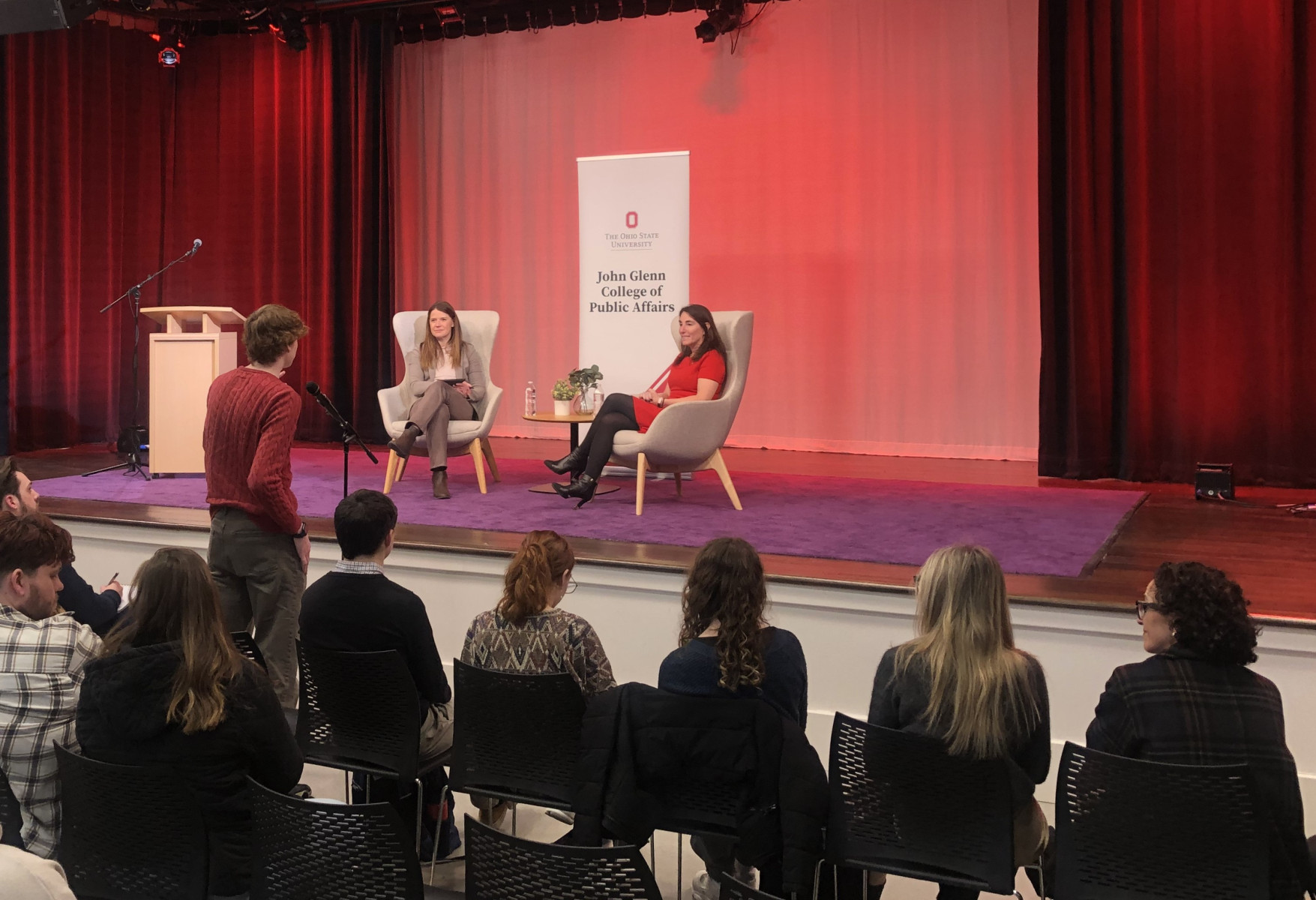
Myers delivered the keynote speech, entitled “Math for Their Future, Not Our Past: Maximizing Potential Through Powerful Practices” during the 9th annual Math Summit held at NC State on Aug. 5. The event, which is sponsored by the NC State College of Education and the Triangle Math Alliance – a regional consortium of the Chapel Hill-Carrboro, Durham, Johnston, Orange and Wake County public schools – and funded by the Goodnight Educational Foundation, is designed to help practicing teachers learn more about best practices for mathematics teaching and learning.
During her talk, Myers engaged the crowd of North Carolina teachers in hands-on activities that demonstrated the power of three powerful practices she has adopted over the course of her career that she believes position students as learners and doers of mathematics.
- Leverage the Power of Rough Draft Thinking
Pulling up a photo of a vase filled with candy eggs, Myers asked the roomful of teachers to guess the total number of eggs in the jar by writing down a low estimate, a high estimate and their best guess at the actual answer. She then engaged them in a process called “estimysteries” (a portmanteau of the words estimates and mysteries), providing them with clues such as “the answer is a multiple of three but is not an even number,” to help them refine their thinking until they came to the correct solution.
The goal of rough draft thinking, Myers said, is that all presented ideas should be valued as drafts that are open to revision and that educators must listen to what students have to say rather than listening or waiting for the correct answer.

The teachers in the auditorium said they enjoyed going through the process of rough draft thinking, noting that using it in their own classrooms will encourage students to make mistakes, empower those students who don’t always get the correct answer right away, enable students to see their progression of learning and realize that it’s OK to change their answers as they are presented with additional information.
- Experience First, Formalize Later
By having teachers participate in the activity where they guessed the number of eggs in the vase, and explaining the process of “estimystery” after, Myers helped them engage in her second powerful practice, which enables students to notice, wonder and generate ideas before the teacher provides support by connecting those ideas to formalized learning.
One teacher in the auditorium noted that the concept of “Experience First, Formalize Later” flips the traditional teaching method of “I do, we do, you do” and helps students become more active agents in their learning.
“I’m always amazed when I flip that order, and I start with giving students an experience,” Myers said. “The things they know, the things they notice, the things they wonder spark so much curiosity, which goes back to the purpose of mathematics as we think about sparking that joy for students.”
- Use Visible Random Grouping
Decisions about how students are grouped when engaging in mathematical tasks, Myers said, sends a message to them about their role in the classroom, even unintentionally.
“The reality that we live in as educators is that every decision we make around instructional grouping sends messages to our students about their value. It also sends messages about whose knowledge in the classroom is of the most worth,” Myers said.
To combat this, she suggests teachers use technology tools or traditional paper cards to randomly match students together for group work. For the practice to be successful, she recommends students witness the random process and that it happens frequently, so students regularly work with and engage with different classmates.
Bringing Math Summit Lessons Back to the Classroom
Myers concluded her talk by challenging teachers in attendance to adopt one new practice to use in their math teaching this year. But, for some repeat visitors to the Math Summit, bringing new ideas learned through the event into their classrooms is a regular occurrence.
“The different [sessions] we’re allowed to take really help us bring different, new ideas and integrate them into our classroom,” said Francis Walker, a fifth grade teacher at York Elementary School who was attending the Math Summit for the second time.
Using what she learned at a previous Math Summit, Walker has integrated more mathematics manipulatives into her classroom, finding that her students more easily grasp concepts when engaged in hands-on learning activities.
Christine Bonin has also made changes to the way her students at Mills Park Middle School engage with math lessons since attending a Math Summit several years ago.
The walls of her classroom are now adorned with white boards so that students solve math problems at vertical learning stations, rather than alone at their desks. The practice, which she learned about during a Math Summit session, helps the students to more naturally engage in mathematical discourse.
“When they stand up, they naturally tend to talk to each other whereas, when they’re sitting down, they don’t talk to each other,” she said. “When I came a couple of years ago, I learned [these] valuable techniques with vertical learning stations, and I’m hoping that I’ll walk away today with something as valuable as that.”
link